Under the Patronage of the Governor of the Eastern Province, Imam Abdulrahman bin Faisal University Launches “Inclusive Community 2025” to Advance the Empowerment and Integration of Persons with Disabilities.
Under the gracious patronage of His Royal Highness Prince Saud bin Nayef bin Abdulaziz, Governor of the Eastern Province, Imam Abdulrahman bin Faisal University inaugurated the “Inclusive Community 2025” event, featuring wide participation from internal and external entities across governmental, private, and nonprofit sectors. The event was opened by the University President, Prof. Fahad bin Ahmed Al-Harbi, in the presence of the Vice President for Development and Community Partnership, Prof. Assim bin Abdulrahman Al-Ansari; the Vice President for Academic Affairs, Dr. Abdullah bin Mohammed Al-Muhaidib; and the Vice President for Research and Innovation, Dr. Jehan bint Ahmed Al-Humaid. The event included 40 participating organizations and six panel discussions; all aimed at unifying initiatives that promote inclusivity and equal opportunities for all members of society.
“Inclusive Community 2025” reflects the University’s commitment to empowering and integrating students with disabilities, enhancing their academic and social engagement through a supportive environment that highlights their abilities and contributes to improving their quality of life. In his remarks, Prof. Assim Al-Ansari emphasized that the University’s dedication to this group stems from a solid national vision supported by the Kingdom’s leadership, reinforced by the enactment of the Disability Rights Law as a foundation for empowerment and participation. In line with this vision, the University has harmonized its academic, research, and community efforts with the national direction toward building an inclusive society, exemplified by the establishment of the Student Disability Support Unit under the Vice Presidency for Academic Affairs to create an accessible and inclusive learning environment. This commitment is further reflected in the issuance of multiple guides and regulatory frameworks that ensure the well-being, rights, and full inclusion of students with disabilities on campus, enabling them to represent themselves, their university, and society effectively.
The University has organized over 100 activities both inside and outside the campus, focusing on skill-building, support services, and awareness programs, benefiting more than 5,000 individuals. Prof. Al-Ansari expressed appreciation for the Governor of the Eastern Province’s patronage, the continued support of the University President, and the coordination efforts of the Student Disability Support Unit. He affirmed that “Inclusive Community” serves as a national platform highlighting initiatives that support persons with disabilities, strengthen partnerships to empower them, and foster an inclusive society, in line with the objectives of Saudi Vision 2030.
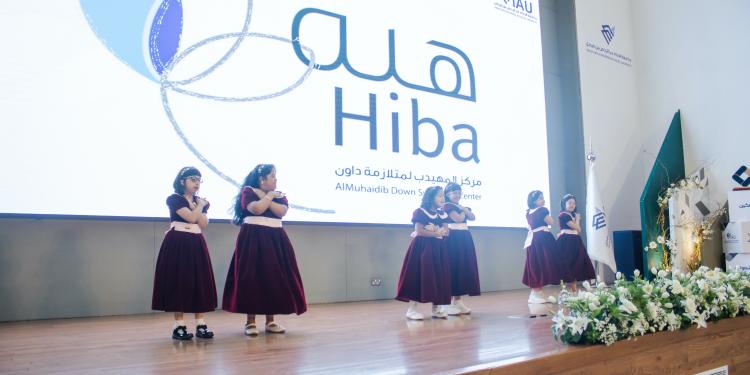
Dr. Mohammed Al-Adasani, the event supervisor, highlighted that the opening ceremony featured a performance by children with Down syndrome from Heba Center, embodying the event’s message and objectives. The event included an interactive exhibition, advisory and educational booths, and recreational spaces, alongside workshops and awareness lectures for university members, students, and community visitors, covering topics such as health, social inclusion, and vocational rehabilitation. These included discussions on inspiring success stories, employment empowerment programs, and workshops on sign language and adaptive diving for people with disabilities. The event also featured interactive sports activities and competitions held at the main stadium and the sports hall on the Eastern Campus, aimed at promoting the importance of sports for people with disabilities and fostering a culture of equality and community participation.
The exhibition, held in the Deanships Hall, featured a variety of interactive booths presented by university colleges alongside external organizations focused on disability empowerment. The booths included educational, advisory, and experiential stations covering health, physical therapy, oral and dental care, sign language, Braille, adaptive diving, as well as art and recreational corners for children and families. Specialized centers and associations, including Efa’a, Shamaa Autism Center, Hemmah Society for the Blind, and Banan Association, offered awareness programs and live demonstrations showcasing the capabilities and success stories of persons with disabilities.
Within the scientific program, the event hosted sessions and workshops, including an inspiring dialogue presenting the success story of a gifted student with a disability, with participation from his mother; a workshop on social awareness as a foundation for successful inclusion directed at education professionals; a lecture on adaptive diving for persons with disabilities, discussing challenges and solutions in collaboration with Marjan and Sadaf Centers; a lecture on the mental health of mothers of children with disabilities; and a session on empowering persons with disabilities in the digital job market, in partnership with Saee Foundation, alongside presentations on experiences and employment opportunities. The event also included various sports activities organized by the Colleges of Public Health and Sciences and the Deanship of Student Affairs, in cooperation with Al-Ettifaq Club, focusing on motor games and interactive competitions to raise awareness of adaptive sports for people with disabilities.